
1. What are the benefits of Miksgrow peat-free substrate?
Miksgrow peat-free substrates deliver reliable performance for professional growers who want a more sustainable alternative to peat. Made from renewable and circular raw materials and produced independently of seasonal fluctuations, it ensures consistent quality and dependable year-round availability.
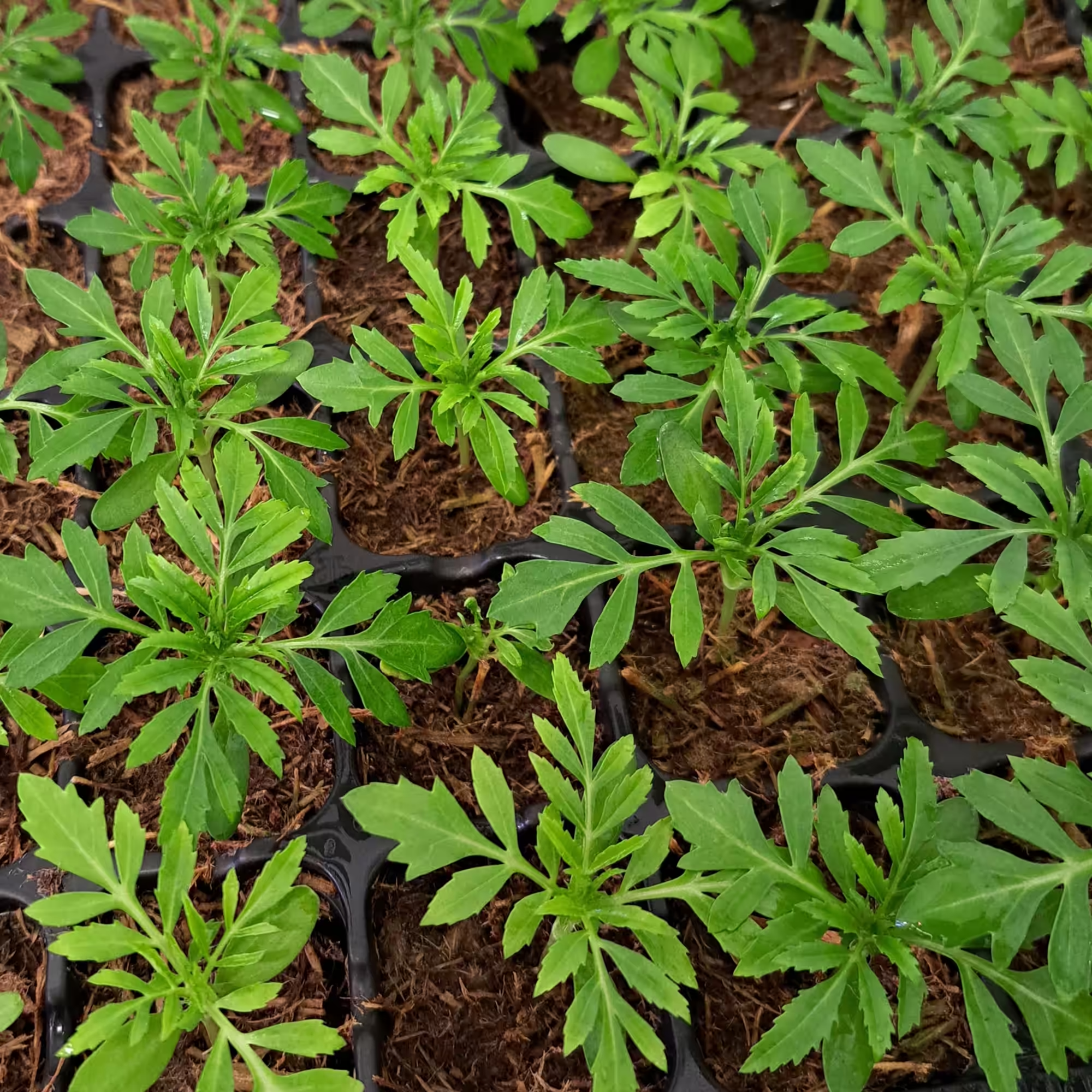
In terms of growing performance, Miksgrow offers strong physical properties that support healthy plant development. Its structure provides an effective air-water balance for greenhouse production and maintains stable porosity throughout the crop cycle, promoting vigorous root growth and uniform germination (88–96%). Because it resists compaction, the substrate stays structurally stable and performs consistently even over longer production periods.
2. What materials are used to produce Miksgrow substrate?
Miksgrow peat-free substrates are produced mainly from softwood raw materials such as Baltic pine, sourced from sustainably managed Estonian forests. These softwood fibers provide strong structural stability during cultivation, helping the substrate maintain its physical properties throughout extended production cycles.
To further improve performance, Miksgrow also incorporates bark fibers. Bark naturally contains higher levels of phosphorus and potassium than standard wood fiber, which helps enhance the substrate’s nutrient profile and supports better overall nutrient availability for crops.
3. Which crops are best suited for Miksgrow peat-free growing medium?
Miksgrow substrates are designed for a wide range of crops and cultivation systems, providing reliable performance as a versatile greenhouse and nursery growing medium. The Miksgrow range includes two substrate grades:
- Miksgrow MXX is a finer grade intended for seedling production and propagation.
- Miksgrow MYY is a coarser grade intended for potting up, repotting, and nursery container cultivation.
This makes Miksgrow suitable for a wide range of crops, including ornamentals, vegetables, and nursery plants, across multiple production stages.
Irrigation management
4. How would you describe the water retention in Miksgrow peat-free substrate?
Water behavior in wood fiber substrates differs noticeably from traditional peat. Miksgrow’s peat-free growing medium takes up water quickly, even when dry, because wood fibers are naturally hydrophilic. By contrast, dry peat can become water-repellent and often requires thorough pre-wetting to rehydrate properly. This makes Miksgrow easier to manage during irrigation and helps improve overall watering efficiency in peat-free production.
Miksgrow also promotes more even moisture distribution throughout the substrate, so water is more consistently available to the root zone. Drying speed will vary with climate and greenhouse conditions, but trials show that Miksgrow remains within suitable drying ranges for professional use. Its stable structure and resistance to compaction further support consistent moisture management and help reduce excessive drying in warmer production areas.
5. Do watering practices need adjustment with this peat alternative for horticulture?
Yes. When transitioning to Miksgrow peat-free substrate, irrigation practices typically need some adjustment. During the first production cycles, monitor moisture levels closely to understand how the substrate behaves in your specific system. Using moisture sensors can be especially helpful, as they provide objective readings and reduce the risk of over- or under-watering.
It is also common for the surface layer to dry out faster, which can give the impression that the whole substrate is too dry. In most cases, the lower profile still retains adequate moisture for the root zone thanks to the substrate’s stable, non-compacting structure. For best results, rely on regular measurements and consistent monitoring rather than surface appearance alone.
6. Does using Miksgrow peat-free substrate increase water consumption?
Water consumption is unlikely to increase when using Miksgrow as a peat alternative. Its wood fiber structure supports efficient water movement, helping water reach the root zone quickly and evenly. With appropriate irrigation management, there is no reason for overall water use to rise in greenhouse production.
In many cases, optimized irrigation can even reduce total water consumption. Miksgrow’s strong water-holding capacity and uniform moisture distribution can improve water availability to roots compared with traditional peat-based media, helping growers maintain consistent moisture levels with fewer unnecessary applications.
Miksgrow peat-free growing medium nutrient management
7. Can Miksgrow peat-free substrate bind nitrogen or other essential nutrients?
Yes. As with many wood- and bark-based growing media, Miksgrow can temporarily bind a portion of nitrogen as microbes break down the carbon-rich fibers. To account for this, Miksgrow is enriched with a starter fertilizer that includes higher nitrogen levels, suitable for both short and long crop cycles, helping ensure adequate nitrogen availability during early establishment.
During active growth, some adjustments to nitrogen fertilization may be needed, depending on the crop and production system. In practice, consistent irrigation management and the substrate’s uniform moisture distribution can improve nutrient uptake efficiency and may help reduce overall water and fertilizer use.
8. Does Miksgrow peat-free substrate retain nutrients effectively?
Miksgrow’s wood-fiber-based medium typically has a lower nutrient-holding capacity. As a result, there can be a higher risk of nutrient leaching, particularly under heavy irrigation or high drainage. To maintain stable nutrient availability, growers should rely on regular, well-controlled fertilization and irrigation practices. With an appropriate feeding program and careful water management, Miksgrow can support consistent nutrient supply and healthy crop growth in professional greenhouse and nursery systems.
9. Is Miksgrow peat-free substrate resistant to compaction?
Yes. The wood peat blend used in Miksgrow is designed to maintain a stable structure and good aeration throughout cultivation. In current trials, the substrate has shown strong resistance to compaction, with no significant structural collapse observed during extended irrigation or crop growth. This stability helps preserve pore space and maintain consistent air exchange in the root zone, supporting healthy root development over the full production cycle.
10. What is the mold risk in growing media like Miksgrow?
Mold risk is low in Miksgrow. The heat-treated wood fiber and bark fiber components help reduce the likelihood of mold development, and testing indicates that mold formation is unlikely under normal cultivation conditions. As with any growing medium, storage conditions still matter. If the material is kept in warm, humid environments for extended periods, the risk of mold can increase. In practical use, the surface layer typically dries faster, which further helps limit mold pressure during production.
11. Does Miksgrow peat-free growing medium need pre-wetting?
No. Miksgrow does not require pre-wetting before use. Unlike traditional peat, which can become water-repellent when dry, Miksgrow’s wood fiber structure absorbs water readily without any pre-treatment.
In fact, pre-wetting can make the substrate overly wet and heavy, which may complicate handling and potting. For best results, fill and plant first, then irrigate after planting to bring the substrate to the desired moisture level. This makes handling simpler and supports more consistent water management in production.
12. Does Miksgrow peat-free substrate need compaction during potting?
No. Miksgrow should not be heavily compacted during potting. Excessive pressure can reduce air space in the substrate, limiting aeration and potentially restricting root development.
In most cases, the substrate will settle naturally during irrigation as water moves through the profile. If needed, you can apply light, even pressure to level the surface, but avoid firm tamping or over-compaction.
Miksgrow peat-free substrates is a practical, proven alternative to peat for horticulture, enabling professional growers to reduce environmental impact without compromising crop performance. This wood-based growing media blend offers clear advantages for greenhouse production, including high water-holding capacity, reliable and consistent structure, strong resistance to compaction, and dependable year-round availability.
Transitioning to this peat-free medium may require adjustments to irrigation and nutrient management, but the learning curve is manageable. Improved water distribution, low risk of mold development, and long-lasting physical stability make it a well-suited sustainable substrate across a wide range of applications, from ornamental crops to vegetable production.